Friday, July 10, 2026

SEMPER AD MELIORA

 I've been drinking less over the last few years and like to mix up my drinking choices so don't like having to come back to the same bottle in the fridge night after night.

A half a bottle of wine on a weekend night is OK and usually a third of a bottle on a weeknight is sufficient.

I had been decanting wine from a 750ml bottle into a 375 ml bottle, filling it right to the top with no air gap and screwing on a cap. This keeps well in the fridge for a couple of weeks but it is a hassle.

In previous posts I've lamented the disappearance of decent wines sold in half bottles. Years ago when I first started to drink, collect and sell wine many producers had half bottle offerings of even their top wines. It was a great way of trying new brands and styles and a convenient way to accompany a meal at home or in a restaurant. I'm happy to say that some producers have gone back to this. I've recently purchased Ata Rangi pinot noir, Kumeu River chardonnay, Mount Edward pinot noir, Maude pinot noir, Peregrine pinot noir and some others that have been well priced. There aren't enough of them but it's a start - or a restart.

What's even more exciting is the emergence (again) of wine in cans, usually 250ml size which is a third of a bottle. This is an ideal quantity to drink before or during a meal. I've been interested in this for many years and have posted on it:

HERE

AND HERE

Technology advances and diligent experimentation by winemakers is proving that quality wine can benefit from being packaged in cans and, along with recyclability, lower transportation costs, reduced shelf space and convenience makes this form a no-brainer to use. The trouble is though, as seen in the initial resistance of both producers and consumers to the shift from cork wine to screw cap wine that such a radical change takes time. Like the acceptance now (in New World countries) of screw cap wines I'm certain that canned wine will one day be very popular. It will just take experimentation from consumers and bravery from producers to enable the shift.

At present, in New Zealand we are seeing some regular stocking of a few brands and varietals. Initially the offerings were poor as the wine used in the cans was cheap and poor. Some producers are showing bravery however with The Ned and Villa Maria leading along with some others like The Uncommon and JOIY beginning to extend their ranges. 


Initially the offerings (after the introductory cask-quality plonk) were prosecco styles and sauvignon blanc and pinot gris but now decent pinot noirs and roses are being stocked. I buy The Ned Marlborough rose and Marlborough pinot noir which are not only decent to drink but compare favourably in price to the same quantity of the same wine in a 750ml bottle. I've also bought some The Uncommon and JOIY pinot noirs from Martinborough and Central Otago which were OK. I'm anticipating the release of some decent Hawkes Bay chardonnay soon.


Wednesday, August 20, 2025

Sunday, April 13, 2025

GOING DOWN

 You will be aware that I've bemoaned the disappearance of smaller format bottles of wine (500ml and 375ml) as a result of manufacturing and retailing 'efficiencies'. The cost structure - according to manufacturers and retailers - has made production and sale of these inefficient. They made this decision without consultation with or surveying of consumers. I guess they just know better.

When I first became involved in the wine industry, 375ml or half bottles were often the norm across many brands and wine styles regardless of the price and quality scale of the wines. More often than not there was a half bottle offering of Burgundies to a high level, Chateau bottled clarets up to First Growth levels, quality German wines at any level, top Australian, American, Italian, Spanish and even New Zealand wines often at top levels. No one talked about inefficiencies and consumers expected to pay more than half the price of a 750ml bottle for a 375ml one.

When supermarkets around the world began to dominate wine sales the wine category buyers in the supermarket chains began to bully suppliers on price, demanded promotional deals, 'sold' shelf spaces and  dictated wine styles and packaging requirements. It wasn't  a case of knowing best - more. a case of having power and flexing it indiscriminately not unlike the way that USA's stupidest president is doing on trade wars at present. A side effect of this has been the decline and almost eradication of the half bottle.

I haven't had much success in securing supply of quality half bottle wines (most offerings are at the basic quality level) across a range of varietals so have resorted to using my version of the ''solera'  system.

The solera system is a fractional blending method used primarily for aging sherry but also employed for other beverages like brandy, beer, and certain types of wine. It involves blending wines of different ages in a dynamic process, with older wine gradually being replaced by younger wine over time.This continuous blending creates a consistent flavor profile and ensures a steady stream of aged product.


I don't blend or replace wine in my system although blending has become a norm for us e.g. Her Indoors likes Californian chardonnay while I prefer New Zealand Hawkes Bay chardonnay. Sometimes when I've bought a HB chardonnay that is a bit too woody or hasn't had enough good wood aging I blend a bit of her Californian chardonnay into it, The roundness and creaminess of the Californian gives a lift to the HB one. The reverse can work as well - I find the Californian style too over the top in Malo-like creaminess but with the structure and freshness of the HB chardonnay adding some improves the Californian. Does that make sense? Never mind - back to my 'solera' system.

As it is usually just me drinking the Hawkes Bay chardonnay or a pinot noir (she prefers zinfandels) I don't want to drink a whole bottle at a sitting (4 large glasses). I used to just leave a half a bottle in the fridge for coming back to a couple of days later. The problem with this is that I don't always want to drink the same wine again so soon after, preferring to mix and match my wine drinking and tasting. Wine in an opened bottle will still be good in the fridge (red, white or rose) for several days before it loses freshness. 
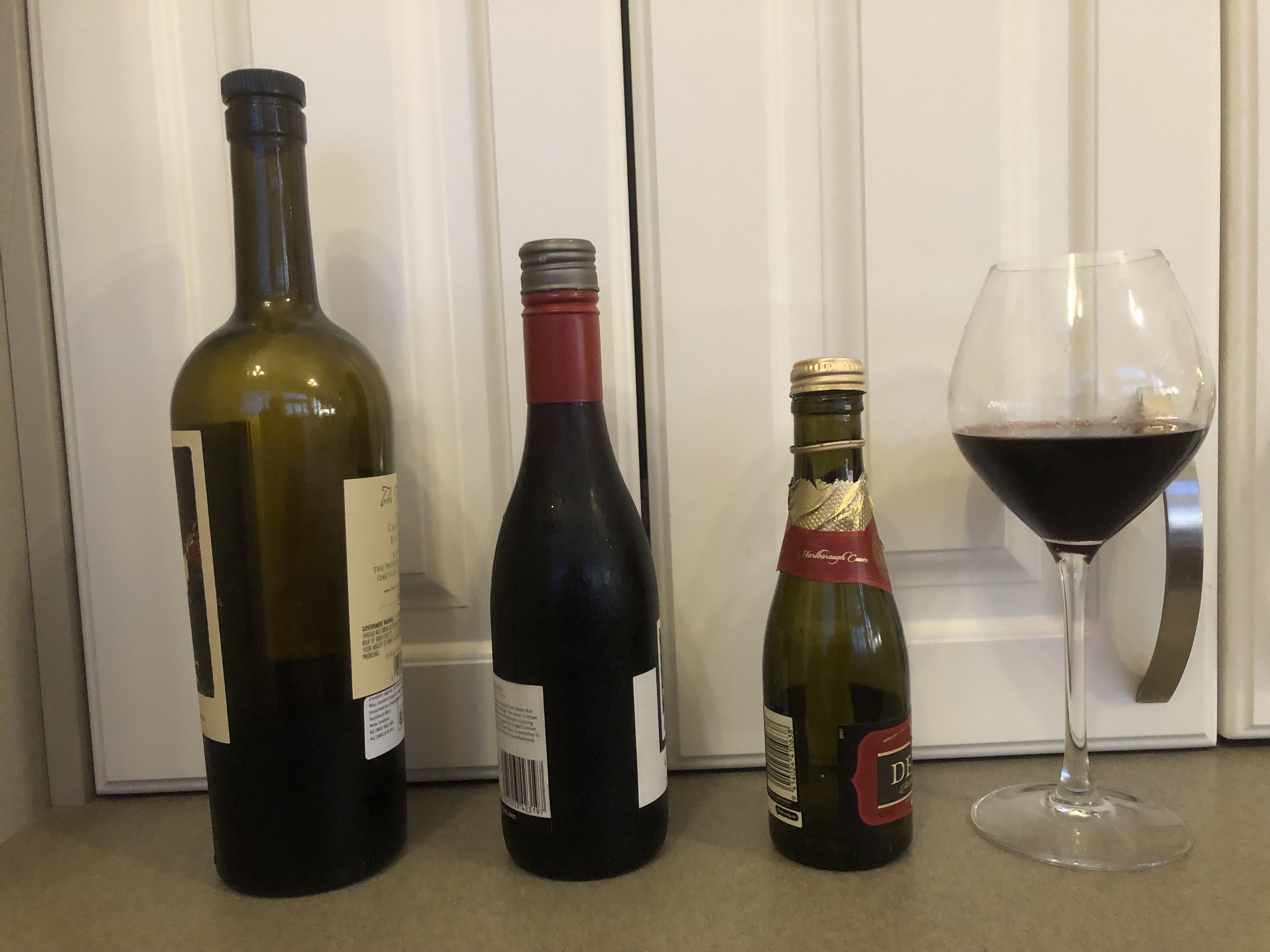
What I do now is, on opening a bottle that's not being shared (like a Champagne) I immediately decant half of it into a clean 375 ml bottle - putting that away in the fridge and drinking the other half (2 glasses). If I only want one glass I decant half the bottle into a 375ml bottle and a quarter into a 187ml bottle. I put both of these away in the fridge for drinking later. You can see that this is a diminishing system where 750ml becomes 562ml or 375ml and can then become 187ml left. 4 glasses to 3 glasses to 2 glasses to 1 glass. Here's a pic showing a red wine I did this with recently:


The trick is to make sure that the bottles a scrupulously clean, have a good sealing scrap and to fill the wine up to the absolute top leaving no air between the top of the wine and the inside of the cap. I've found that, even in the smallest bottle the wine, kept in the fridge will be good for several weeks.

It might sound like a bit of a fankle (effort) but this is well worth doing to cut down on wastage with a good quality wine and to offer interest and variability in tasting.

Wednesday, September 11, 2024

"YOU'LL MISS ME WHEN I'M GONE"*

 * Was what my mother used to say to me when I was 'cheeky' to her.

She's right, I do miss her.

Those other bloggers Richard and Robert have, for it seems ever, made fun of my blog posts and it seems have protested too much.


Because I didn't post for three days the poor, sad old men obviously missed me and took to writing about it in their blogs and comments. I guess that they need some sort of inspiration in their blogging, even from negative sources.

Sunday, September 1, 2024

MONMARTHE CHAMPAGNE

 We like to drink Champagne and good quality methode traditionelle wines at our house and, now that we are older and drinking less (but better) we tend to drink Champagne more often than we used to.

We share a bottle and, with the Stuart crystal Champagne glasses we use, get 4 glasses out of the bottle. The pours are closely scrutinised for fairness of two glasses each - a consideration we don't apply to other types of wine.

This, not every weekend, is a Saturday evening treat while playing pool in the 'snooker room' as dinner is cooking in the oven.

Her Indoors (the title much more appropriate in the post 2020 Covid days as she works from home mostly now) and I rarely, if ever, open, let alone consume a 750 ml bottle on our own and, while with proper corking (the Broken Shed vodka bottle cork is ideal) the opened  Champagne is good for a day or two in the fridge we tend to only open a bottle when the two of us are together.

I rarely travel nowadays but she does - visiting friends and relatives and on secondment with her work both domestic and overseas. This creates as you can see, a conundrum when we are separated on weekends.

In previous posts I've recounted how I'm always on the hunt for good quality half bottles of wine. These are largely a thing of the past with, when they are available, being wines at the bottom end of the price and quality scale which, quite frankly is a nonsense. Either that or they are invariably fortified or 'sticky wines' neither which we consume anymore. We're a ready market for good quality pinot noir, chardonnay, rose and zinfandel or Italian reds but sadly there are never any on offer.

The same goes for Champagne and good quality sparkling (Methode-style). Our favourite NZ bubbles are Deutz rose and Blanc de Blanc but the manufacturers haven't thought to put these in half bottles. They do make half bottles of the standard Deutz and decanted bottles of 200ml 'piccolos' but. while reliable we find this blend a bit simple. We do buy the odd, when available, 375ml bottles of Grand Marque Champagnes (Veuve Cliquot, Pol Roger, Lanson, Louis Roederer etc) but they are usually prohibitively expensive.

Last week I found, via an internet search a small distributor Three French Vines selling an interesting boutique selection including 375ml bottles of Monmarthe Champagne.

The price was good (about $33 a bottle) so I bought a dozen. These will be good to keep for occasions when either of us a alone or when we just feel like one glass each. I hadn't heard of Montmarthe before so had a look at the description on the Three French Vines website and on other websites.

Three French Vines had this to say:


All good but I don't place much faith in wine reviews and competition results unless they are top competitions and very reliable wine scribes. It told me that the Champagne is 49% pinot noir and 40% pinot meunier with the rest from chardonnay grapes. It indicates a style that the description matches - ripe, toasty and soft.

Nathalie MacLean, a wine writer whose reviews I trust had this to say:

Natalie's Score: 91/100

Monmarthe Secret De Famille is a 1er Cru Brut Champagne, a solid and fruity traditional method bubble produced by a sixth-generation champagne family. The wine has been aged on its lees for two years and is dry, zesty and toasty with white-fleshed stone fruit, honeyed nut, baked pastry flavours on a fine and persistent mousse with a zesty finish. Very nice now. Chill and enjoy it on its own or with chips and dip.


OK, not glowing but suggests that the wine is solid and reliable.

The wine arrived on Friday and I opened a bottle yesterday.


While clearly not being of Grande Marque standard it is of course half the price of a Grande Marque. The wine is pretty much to the descriptions given. I detected a nuttiness to it that was pleasant and added to the roundness. The wine seems to have bottle age but the disgorgement date etched on the bottle is obtuse which is annoying. Overall though it's fit to purpose and we will use it up over the next 6 months or so.


Tuesday, May 28, 2024

LEFT A BIT

 I did some further 'fossicking' in the cellar (actually it's just a basement now as the wine cellar has gone after having sold off all the treasures and I haven't been buying any 'keeping' wines) I turned up a few more fortified wines that we will consume over the winter months.


Left to right are:

  • Noval 10 y.o. (half bottle)
  • Quinta da Noval 1997 vintage port (half bottle)
  • Hardy's Whiskers Blake tawny 'port'
  • Lauriston Reserve Muscat
  • Noval 10 y.o.
  • Warre's 1970 port
  • Dalva 10.y.o.
The gems here are the Warre's 1970 and the Quinta da Noval 1997.

Warre's 1970 is rated as being the best vintage of Warre's produced which will make it interesting drinking after the outstanding 1983 (half bottle) we tried on the weekend and the subject of the previous post).

Here are a couple of reviews from tasters who have tried it over the last year:


I'm looking forward to trying our one. We have friends visiting in a few weeks so will likely open it then.

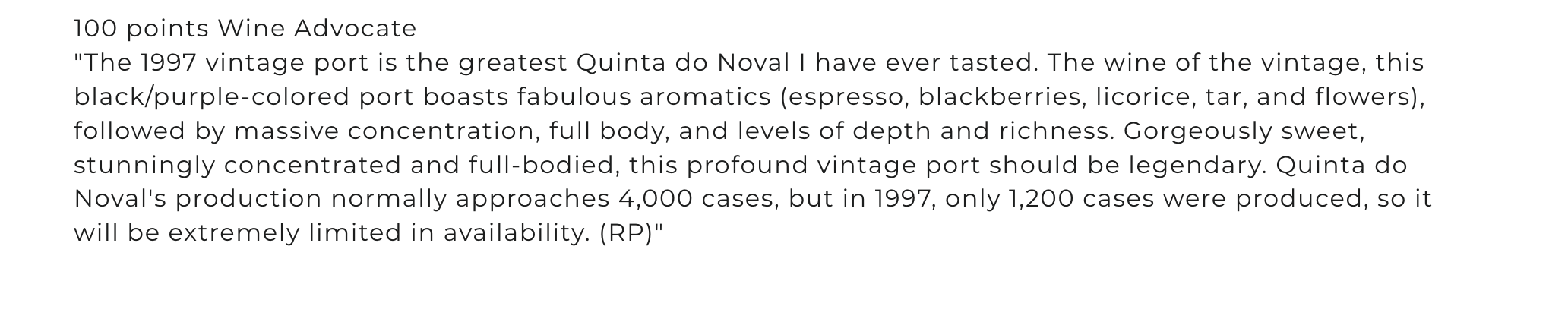
The Quinta da Noval 1997 is similarly well rated. Here a re a couple of reviews:


Again, I'm looking forward to trying it again.Being a half bottle we will drink this soon just between the two of us.
Both the Warre's 1970 and the Quinta Da Noval 1997 are fetching huge prices on the market and maybe if I had several bottles I might be tempted to sell but as we kept these bottles back when we sold all the ports and other good wines at auction a few years ago, these are for drinking.

The other ports (and the muscat) won't be great but we have had them for a long time (between 20 and 30 years) so while the styles don't improve in bottle should have mellowed quite a bit. Hey! We're set for the possible very cold winter we are going to have.

I'll post on the wines as we try them.


*******************************

PART 2


I had finished this post and then I went down to the cellar basement later looking for some old Zinfandel that I remembered having.
I moved the spare wheel to the trailer, my bike, the trailer tarpaulin cover, some old rope and fishing poles, several cartons of wine glasses and three big bags of golf balls and there was a box of old ports - staring me in the face all the time!

I also discovered, along with a few bottles of old American Zinfandels an unopened case of Novum NZ Pinot Noir 2019 vintage. I'd totally forgotten about this. I'll post on these wines later as this post is about port.
I brought the six bottles of port upstairs and cleaned the bottles.


They are:
  • Taylors 20 year old
  • Silval 1997 vintage
  • Noval forty year old
  • Noval Late Bottled Vintage 1994 (three bottles)
Sadly one of the Noval LBV has leaked but at least we have two more.

The wine is stuffed.

This again was a treat as I'd totally forgotten about these as well.

The Silval, another from the Quinta da Noval stable, while not being as renowned as the main Quinta da Noval wine has had some pretty good reviews.


The Taylors 20 year old and the Noval 40 year old (20 years and 40 years aged in barrels) should also be interesting drinking. The 1994 Noval Late Bottled Vintage  (usually spending a couple of years aging in barrel before bottling) will be a good medium between the vintage ports and the barrel aged ones. All three of these are fetching high prices on the market and getting great reviews. Once again I'll post a review as we taste them. Her Indoors is already making noises about opening one of the half bottles tonight - not waiting for the weekend!


Saturday, May 25, 2024

SATURDAY NIGHTS ALRIGHT FOR ...

 ... well, not for fighting, that's for sure.

The cooler weather has made us think of robust and roasted meals and 'warmer' drinks. To this end I fossicked in the cellar and brought out a half bottle of Warre's 1983 vintage port.

The label slipped a bit after washing the bottle

Thankfully the state of the label wasn't an indication of the state of the wine in the bottle. The cork was intact and extracted safely. I decanted the wine which we will have this evening (roasted potatoes and pumpkin with a broccoli and cauliflower cheese bake is dinner).

As an afternoon starter we've been drinking a bottle of Veuve Cliquot NV Champagne. You know what it looks like so I won't post a picture - orange label remember. The Champagne is fresh and lovely. We love this brand.

I've left the port to 'breathe' in a decanter - not 'gasp' as you might think with it being 41 years old and we will drink it after dinner. We had a tasting glass though and were astounded. The colour is tawny but still has reddish hues. The nose has sultanas and vanilla with no nuttiness. It is still very much alive and well. The wine is silky smooth to taste and is rich, round and sweet which suggests that the fruit is still outbalancing the alcohol or, as you'd expect, the alcohol volume has dropped with the age.

I'm happy to say that I still have a couple of half bottles left of this wine but I imagine that we will have drunk them before spring.


Sunday, May 12, 2024

OLD AND PAST IT

 We like Champagne at our house .... send us some!

Last week when I was cleaning up and clearing out the basement I found a box of forgotten wines stuck in a corner covered by tools, carpets and an old bicycle.

In the box I 'found' (at the corners of my memory I knew they were there somewhere) some 1980 vintage ports (Warre's) half bottles, a couple of bottles of 1988 Ravenswood Zinfandel, a decanter bottle of 10 y.o. Dalva port and three bottles of Remy Martin Club Cognac. "All good" I thought although the Ravenswood will be stuffed. At the bottom of the box was a bottle of de Venoge 1973 'Cordon Bleu' Champagne.


I've had this bottle since 1987 (37 years) when I was clearing out the basement of an old wine and spirit merchants that I'd taken over as manager. It was among some other old relics that, sadly had been opened (old postwar whiskies, vodkas and gins from the 1960s etc that would have been valuable if unopened and intact. I kept the de Venoge as it was unusual in being in a decanter bottle that had the glass stopper strapped to its side. In 1987 the wine was 14 years old - not old for a vintage Champagne but I had no knowledge of its provenance and didn't know how it had been stored so never opened it to try it.

Well, last night I did. I expected it to be flat which it was but hoped for some old Champagne taste. I was disappointed . The wine was sour like old and very tart apple juice. A shame that.

de Venoge 1973 'Cordon Bleu' Champagne doesn't fetch high prices on the international auction market. I found  it for 52GBP on one site and 250 USD on another - good luck to anyone buying it - so don't feel like I wasted anything by opening it.


1973 rated well in the Champagne vintages but generally, recent tastings have proved that Champagne doesn't last that long:

"Overall, the 1973 vintage for Champagne was fantastic with a fair few age-worthy examples. Although, simply due to the sheer length of time passed, many Champagnes are likely to be past their best. The top examples, however, may still be drinking now although careful research is advisable."

 With my bottle the label showed wear but the cork and muselet seemed to be in good condition. 

On opening, the cork was compressed which is not unusual with age and this exacerbates oxidation.


On their website de Venoge still market the Cordon Bleu range but have put the wine in the standard bottle. The 'decanter' bottle is now used for the Princes range.


The wine as you'd expect had no bubbles and was browned. The taste as I said was sour  (more Granny Smith than lemon and honey) and not worth 'freshening up' with some newer bubbles ....


..... I resorted to an old favourite instead - Stoneleigh Rose.


Saturday, April 6, 2024

CE VIN EST JUSTE DIVIN MERCI

"Ce vin est juste divin merci" - a nod in the direction of any catholics reading since today is yet another of the nutty Catholic Church special days named 'Divine Mercy Sunday'.


OK, my apologies there to readers of other religious persuasions and to the more reasonable and atheistic ones. The influence there came from a reader named Robert the catholic cleaner who, like his god goes by many names and manifestations. He likes a mention as it keeps him happy OK? It's best to have happy religious people rather than disgruntled ones, as ... well anyone who is living in schismatic countries.

**********

This post is about a wine that I just opened (early afternoon to allow it to breathe a bit before dinner this evening) and, on tasting it had to say to myself "Ce vin est juste divin merci".

The wine is Terra Sancta Mysterious Diggings 2022 Pinot Noir   


It's very smart and is being discounted at $26 a bottle by several on-line sellers. I bought 3 bottles from one of them and, after trying it today will seek out more.

As you know, and especially from what I said in my previous post I'm a bit skeptical of wine reviewers and wine retailers' reviews which are written to stimulate sales. With this wine however I was attracted to the "2 points off perfect with a huge 98/100 by Top 3 Global Wine Critic James Suckling" that Fine Wine Delivery Company advertised.

James Suckling says… “Gorgeous aromas of fresh flowers, ripe strawberries and tangerine blossoms. Medium-bodied with a lovely balance of fruit and acidity and a creamy texture that is open and cashmere-like in texture. Wonderful finish. A triumph. A joy to drink. Drink or hold.”

Our Tasting Panel 96/100 Review…

Enticing florals with sweet notes of strawberry, cherry, plum and subtle dried thyme. Medium-bodied with deceptive weight of flavour and a delicious vibrancy threading the layers of cherry, berry and plum. The texture has a cashmere like feel… the finish is subtly mouthwatering and seductive. Enjoy now or 3-5 years from vintage… with herb crusted chicken or thyme roasted lamb.

        Fine Wine Delivery Company


Other sellers are also complimentary on this wine without blowing their own trumpets. 

A wise man once said “find the best vineyard sites you can because you can’t out perform your vineyards.” So they found the Sancta vineyard on the now world famous Felton Road in Bannockburn and set up shop.

Terra Sancta. It means sacred earth, holy land and there’s definitely something pretty bloody special about this little corner of the wine world. It’s home to the first vines planted in Bannockburn. And the firsts don’t stop there, these guys can also claim to be the first producer of a wine based Botanical Aperitivo in NZ, the first to plant the Lagrien variety, the first super premium Rosé and the first Rosé producer to make Michael Cooper’s “Super Classic” list.

Once upon a time Otago was all about rabbits and gold. The gold’s gone and the Rabbits are stew – now it’s the grapes that are worth their weight in gold (and especially Pinot Noir!) in these neck of the woods. The Mysterious Diggings label is named after those mining days of old.

This the Terra Sancta Mysterious Diggings Pinot Noir from the 2022 vintage. Using Pinot Noir from their Bannockburn vineyards the guys at Terra Sancta describe this one as a “delicious, vibrant Pinot Noir” and reckon she’s all good to drink now up to 5 years from vintage.

The Good Wine Company

Here's the tasting note from the winery.


I like this because it's informative and not over-the-top effusive and describes the wine well.


$25.99 was a good price for this and I'll enjoy a half bottle tonight with the mince pie and mash I'm making for dinner.


Tuesday, March 19, 2024

SLIPPAGE

When I worked in the wine industry I was much more up to date with all things wine espeacially styles. vintage status, brands and competitor products.


Now being long out of the industry I'm a bit out of touch with the wines in the market and, when purchasing from wineshops, supermarkets or on-line, refer more than ever before to wine writer endorsements when confronted by an unknown wine. Generally I stick to my favourites but now and then purchase new wines. When seen on-shelf the only thing to differentiate from a host of similar wines tends to be the 'gold' stickers on a bottle. When these are not entirely bogus like a gold sticker saying something meaningless like "We are known for our quality" or "Our winery dog's name is Ruffles" the stickers can be wine show accolades or, increasingly, wine writer reviews.

The problem with wine show accolades is in the quality of the wine show in question. Sadly there are several of these that come nowhere near the reliability of the old Air NZ National Wine Shows of years gone by. They are a watered down variant with suppliers not really seeing them as being the 'make it or break' it opportunity and wines are just shovelled along as part of the yearly marketing programme.

The problem also with wine writer reviews is that may of them are commercial enterprises where money has to be paid for a review. To me this is not entirely trustworthy no matter how much the wine writer or reviewer says that all wines are carefully evaluated on a 100-point scale.

I still trust some of the old favourites like Bob Campbell and Michael Cooper but I never see 'gold' stickers on bottles with their accolades.

Recently I purchased a NZ rose I haven't had before - Black Cottage 2023 from Marlborough. I admit that my purchase decision was influenced by the band of five 'gold medals" at the top of the label (sticker on the bottle).

While I was unfamiliar with this particular wine I do know of Black Cottage and acknowledge that the winery has a good reputation.


The 'gold medals' turned out to be:

  • Gold Medal from New Word Wine Awards (New World supermarket run competition).
  • 5-stars and 93 points from Sam Kim (wine reviewer).
  • 5-stars and 93 points from Raymond Chan Wine Reviews.
  • 5-stars and 93 points from Candice Wine Chat.
  • 'Premium' and 92 points from Cameron Douglas (wine reviewer).
"OK, what's wrong with that?" you might ask.
Well, nothing really - if the wine is legitimately a 92/93 wine out of a hundred. Personally I don't think it comes close. and is a good example of the commercialisation of the reviewing industry.
I found the wine to be slightly tart and a bit 'stewy'. If I evaluated it carefully like a reviewer I'd give it at best 89 and at worst 80 putting it in the bronze to silver category. This of course is moot as I wasn't comparing it to a whole lot of other roses although I did open a bottle of Tipping Point Rose 2023 which knocked the socks off it. I actually blended the Black Cottage and Tipping Point wines together (hence why the photo shows the Black Cottage bottle being empty) which had the effect of improving the Black Cottage but lessening the appeal of the Tipping Point.

Anyway, moving on.

I've known Sam Kim for a long time and am aware of Cameron Douglas. I did know Raymond Chan until he died some years ago and very much respected his wine tasting ability. It does surprise me though to see his name being used on the review of a wine that he obviously did not taste given that he died in 2019.
I looked up 'Raymond Chan Wine Reviews to discover that Candice Chow (yes the Candice from Candice's Wine Chat) writes the reviews for Raymond Chan Wine Reviews. The website she uses says:

Candice has always been a fan of Raymond Chan Wine Reviews; she learnt that Raymond passed away in February 2019, it was a massive loss to the industry, she thought to herself, ” I wish someone would pick up the website and keep writing the same way that Raymond did.”. In December 2019, while Candice visited Martinborough, she happened to bring this up in a conversation with friends of Raymond. “Why don’t you do it?” they said. Then with some encouragement and an introduction to Sue Davies, things came together. Raymond’s legacy lives on, along with over 10,000 wine reviews Raymond accumulated, available to you, free to access.

Well, sorry Candice, this doesn't cut it with me. The sticker you use clearly states "Raymond Chan Wine Reviews" alongside your own and I guess identical review with your sticker "Candice Wine Chat".

I'm neither impressed nor motivated to follow your lead when it comes to other bottles of wine.

I looked up the reviews that these wine reviewers posted on Black Cottage Rose 2023 and found the following:

Tasting Notes

Sam Kim, Wine Orbit writes "Pristine and bright, it's elegantly lifted on the nose with nectarine, raspberry, Gala apple and jasmine nuances, leading to a finely flowing palate that's ripe and fleshy. Light and delicate, yet persistent and delectable."

Cameron Douglas MS writes "Salmon, apricot and pink hues lead to a bouquet of peach and red apple, some whispers of red berry and cherry then a lick of saffron. Aromatic with light floral notes then mineral. On the palate crisp and new, vibrant and fruity. Flavours mirror the bouquet and are accentuated by acidity and youthful fruit power."

Candice Chow, Raymond Chan Wine Reviews writes "Bright, even, pale blush pink. The nose is gentle with some richness, enveloping red berries, watermelon, herbs and floral aromas. Medium-light bodied, red berries and watermelon aromas entwined with citrus zest, fresh herbs and floral elements. The wine is crisp with thirst-quenching acidity; floral and herb details add interest."

And, the winery writes "This wine has a beautiful salmon colour. The aroma is a lovely combination of rose petals, red liquorice, fennel, and sea breeze. The palate has a delicate balance of red berries, watermelon, spice, and Provence herb flavours. The taste is refreshing and juicy, with a subtle savoury undertone and a perfectly balanced light acidity to finish."


Amongst the licks of saffron, sea breezes, watermelon aromas and rose petals I see no mention of the tartness and slightly stewed character I found. Funny that.

Thursday, February 8, 2024

COLD, COLD, COLD


Yes, you know that I like Little Feat.


A well known anoenophile in Wainiomartianland has for years been banging on about drinking red wines chilled.


Most sensible people ignored him and added it to his 'raving loony' portfolio but just recently a respected, albeit very ageing, wine critic has published an article that supports the aforementioned loony.


Bob identified a couple of wine styles that respond well to chilling - in this case gamay and pinot noir and picked three wines that are suited to it.

There are no surprises there since gamay and pinot noir can often be light and fruity. Gamay, with its low tannic levels is probably the  best example, and is mostly seen in the form of Beaujolais the French wine style of wine best served young and - chilled. Lighter pinot noirs also are often better tasted chilled, especially during the warmer months.

If a red wine is light in body, fresh and fruity then the chances are that it will be better chilled rather than drunk at room temperature.

That loony I mentioned earlier might by accident ascribe to this but it's more likely that the light, fresh and fruity gamays and pinot noirs he might drink chilled are just a small percentage of the cheap red plonk he stuffs in his refrigerator and freezer.


***************

In the interests of full disclosure I must admit that for about all of my wine-drinking life (over 50 years now) I have often chilled lighter red wines prior to drinking them and not just roses and sparkling reds. I also keep various opened bottles of wine in the fridge and have a glass before dinner or while cooking and, when it's a red wine I just sip away at that cold whether it's a rose, a light-style red as mentioned or a more solid pinot noir, merlot, shiraz or cabernet sauvignon. I agree with Bob that the cooler the big red wine is that astringency is more pronounced but hey! It hasn't done me any harm.

Thursday, September 21, 2023

JUST WHEN I THOUGHT I WAS OUT ... THEY PULL ME BACK IN."

Her Indoors was in Auckland recently and shopped relentlessly in Smith and Caughey's one of the very few remaining department stores in the country.

Sadly, this too has suffered the decline that retail, especially top end retail has experienced over the last few decades.

Once known for its fabulous window displays, the store now struggles to attract interest.

Heyday

Today

Inside the store the departments have been downsized and the 'magic' has gone. The same happened long ago with James Smith's and DIC in Wellington and more recently with Wellington's Kirkcaldie & Stains and Christchurch's Ballantyne's.

Anyway, amongst her purchases she bought 6 bottles of Francis Coppola Zinfandel 2020.


We are familiar with the brand and the wine style.

We spent some time in the Napa Valley in the early 1990s and Niebaum Coppola was one of the magnificent wineries we visited.


The wines were great and we purchased some top cabernet sauvignon and a couple of wine glasses (the ones in the photograph with Francis Coppola Zinfandel above) which we miraculously got home unbroken. 

When Her Indoors was working out of Wellington in 2020 she bought a bottle, probably 2017 vintage of this and we shared it with Richard and Shelley and their Italian visitor at dinner in the Egmont Street apartment.

The 2020 zinfandel we tried last night is again rich, medium bodied with fruity and spicy fruit and nice toasty oak flavours. Yummy now and will keep well. The petite syrah in the mix is evident and gives a nice backbone to the more luscious Zinfandel fruit.

I've given up drinking big rich red wines like shiraz, cabernet Sauvignon and zinfandel because I find that after two glasses I don't sleep very well. I might have to reconsider that after tasting this wine last night.


Saturday, September 16, 2023

DOING THINGS BY HALF MEASURES

Not this.


I've written and complained many times at the lack of availability of 375 ml (half) bottles of wines in New Zealand. This is very annoying and I believe that wine manufacturers in New Zealand are missing out on opportunities.

As long as supermarkets control wine retail though, this is unlikely to change.


In a December 2018 post I wrote:

Producers have decided that consumers (or not enough of them) are willing to pay the premium that production of smaller size bottles demands. It's not just the cost of the volume of wine or the tax that makes up the cost (half) as the cost of the bottles, labels, packaging and bottling labour costs are nowhere near half of that of the 750ml variant and in the case of small production runs can be more expensive. Bottling lines are configured for 750ml runs and anything outside of this is a costly hassle.
Furthermore, wine retailing is stacked in favour of big chains whether supermarket or not to a factor of 80:20 and these customers just want to move as much product as quickly as possible so can't be arsed about fiddly other sized packaging. Bugger what the consumer wants.

In a September 2019 post I wrote:

Years ago many brands carried 375 ml variants (and bigger formats) of their best wines but this fell away when bigger production volumes demanded greater efficiencies and reduced costs and price points. 375 mls fell out of favour with stockists who presupposed that the consumer didn't want to pay more than half price for a half bottle of wine. In a way they were right given that 750ml bottles are so often on special so the price difference between the two sizes has become greater but they have misread the possible demand through convenience of the smaller format.
The economies are easy to work out. While there is only half the cost of the wine and the excise in the bottle the cost of the bottle, the label and the carton of the 375ml might actually be higher than the cost of the 750ml bottle, the label and the carton due to smaller production runs.

In May 20190 I wrote:

I opened a 375ml bottle of Penfolds Bin 28 Kalimna Shiraz 2006 last night. I expected it to be good and wasn't disappointed. This is seriously good wine and has been consistently so for many vintages. If there is dumbing down of it (which is to be expected under the new ownership regime and the heavy discounting of the brand) it has not yet ruined it.
The reason I bought a case of this wine and the reason I opened it last night, apart from its pedigree and my appreciation of it, was the fact that it is in a 375 ml format (half bottle). Unfortunately these are becoming very rare. Most wine companies have discontinued the practice of bottling some of their production into either magnums (2 bottle size) or half bottles. This is not because of quality considerations (although half bottles do age quicker than full bottles but magnums age more gracefully than 750 ml bottles) but due to cost considerations. A half bottle cannot be just half the price of a full bottle. The bottle can cost the same as will the cork, capsule, labels and cartons. Sensible consumers realise this and will pay the extra. The new power that retailers have now is the problem. They feel that their customers won't pay more than half the normal price of a bottle (have they asked them?) and so won't stock the smaller bottles. They have done the same to the magnums in that they have decreed that as they are more expensive there will not be the same stock turnover therefore it is better to only present the consumer with the one package size - 750
ml.


OK - in summary:

  • A half bottle of wine will not have the same production cost as a full bottle of wine, it will be more because the cost of the bottle, capsule and label will be the same and, due to economies of scale bottling costs will likely be higher.
  • In New Zealand producers don't really care whether there is a consumer demand or not for smaller bottles because they can promote and sell the full bottles so easily.
  • Supermarkets that control the majority of the retail market are just interested in moving through volume.
  • Many consumers won't pay comparatively more for a half bottle (which would probably be 3/5th) to 2/3rd the cost of a full bottle - before discounting.
Outside of New Zealand however half bottles, while not being as abundantly available as in the past are generally still available from the most modest of producers right through to top Chateau French wines. We are being done a disservice here.

What to do?

If I was younger I would take advantage of a market gap here. It may not be huge but I believe that it could be lucrative and, sooner or later someone will take advantage of it.


Specialise in importing half bottles

The rise of on-line wine retailing (I buy from at least 5 different on-line sellers and there are many more) provides an excellent opportunity for specialty or niche products. The on-line business model isn't dependent on having to suck up to supermarkets and retail chains, to pay the usurious listing fees and to have to supply them at low cost and lower margin. The product can be sold direct to consumer who pays the delivery cost thus protecting full margin unless, for any reason the product needs to be discounted in order to quit it.

There is an opportunity for someone to set themselves up as a select provider of half bottles that can be imported from around the world (including the few from New Zealand producers). The specialty nature of this business can, for a time at least, guarantee exclusivity. Frankly, I wish that I'd considered this many years ago.

Specialise in the production of half bottles of New Zealand wine.

The 'Kim Crawford' model that has been copied by many producers now is to contract with wine companies for bulk supply of wine to be bottled under a bespoke label. The wine can be bought off a 'list' of availability or produced to spec following a recipe of instructions. The wine is purchased when finished and shipped to an agreed bottling company who bottle, seal, label and package into cartons to be shipped to the brand owner's warehouse. This model could be easily used for specialty production of 375 ml wines which, across a variety of styles and varietals would provide volume and then economies of scale to secure glass manufacturing cost advantages.

This requires a lot of set up capital, not in manufacturing but in warehousing and stock purchase but, once product starts to move, cash flow will carry it. Ask the Crawfords who became multi millionaires doing this before selling up to international companies.


You can see that  a combination of imported and locally produced wine can cover nearly all wine styles and price points.


I'm an old man and won't be doing this myself but I'd like to see someone pick up and run with this.


Tuesday, August 15, 2023

SAME OLD


.


There are a couple of people reading this blog ....... hold on. I'd better rephrase that or you'll get the wrong idea .... a couple of readers of this popular blog have, on their own blogs (don't bother), written about their choice of wine plonk being  'cleanskins'. Oh, here you go, here's a link to a previous post I wrote about one of them: HERE

Cleanskins, as you know was a term coined back in the late 1990s to cover the wines that retailers were selling on winemakers behalf when winemakers couldn't sell their wines easily and did not want to invest in labels and packaging. Here a re a couple of posts I wrote on this a while ago:

CLEANSKINS

CLEANSKINS 2

Those two jokers I mentioned, being late adopters, take pride in their 'discovery' of a cheaper way to drink their favourite tipple - plonk, little realising that the ship has sailed and 'cleanskins' are now just part of the marketing mix and not fantastic bargains.

OK, "more fool them you might think" but you need to have an understanding of their naivety.

They are naive.

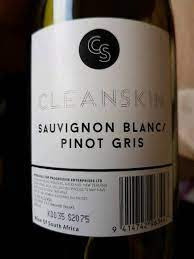
They celebrate the fact that they buy 'cleanskin' wines little realising the the 'cleanskin' that they buy is just another wine brand - with a bloody label on it. Sheesh!


Here's a close up of a LABEL!


What more can I say?


Tuesday, July 25, 2023

YOU JUST CAN'T HELP SOME PEOPLE


A regular reader ... sorry, a reader of this blog said in a comment a while ago that he feels like a connoisseur. I don't know what he planned to do with that connoisseur if he found one - the mind boggles.

Richard of Richard's Bass Bag drinks a lot of wine - a lot of wine - but it seems that quantity doesn't equate with quality.


Oops - wrong image


Here you go.

I've tried to point him in the right direction over the years but his default setting overrides my suggestions for good chardonnays.


Wine tasting protocols just don't register with him even if he goes through the motions:


I had a look at some of his recent posts to see if there's been any improvement but no, he seems to just drink the same old thing, his usual brand - Cleanskin:


The only other wine he mentioned was one he found behind a bookshelf. It must be years old and long past its best That reminds me of something .....


Oh wekk, at least he's contributing to the wine statistics.